


Discover more from Dr. Staci on Substack.
Fix cavities, bad breath, receding gums, snoring, and hormones at the root. Weekly at-home tips from a board-certified dentist, because “brush, floss, and avoid sugar” were never the only answers. 🦷

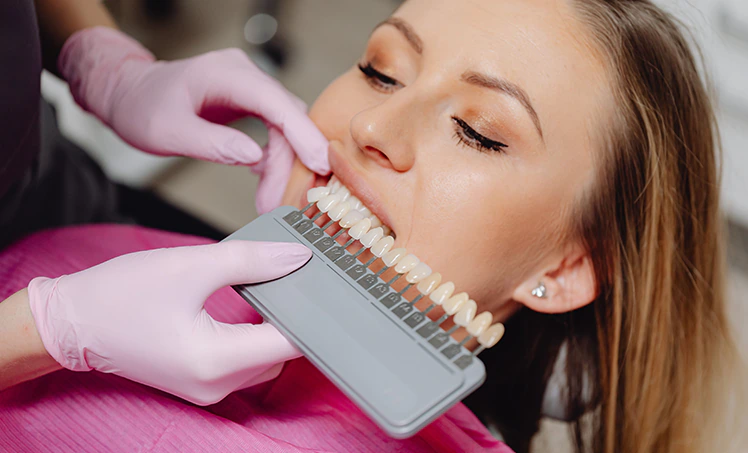

That zing scares a lot of people into thinking they just melted their enamel. They didn’t.
Is teeth whitening safe? Done sensibly, yes. Peroxide leaves your enamel’s mineral in place. It does dehydrate the tooth for a day or two and annoy the nerve, and once you understand that chemistry, you can whiten without paying for it in sensitivity.
Used in short rounds with breaks, products with the ADA Seal have not been shown to harm enamel in any lasting way. Trouble starts with high strength, high frequency, and acidic products stacked together.
Every real whitening product, from drugstore strips to the in-office gel under a blue light, uses hydrogen peroxide or carbamide peroxide. Carbamide peroxide breaks down into hydrogen peroxide at about a third of its labeled strength.
Enamel looks solid, but at the microscopic level it’s porous. Peroxide diffuses through it into the dentin within minutes.
There it releases free radicals that break the double bonds in stain molecules, the chromogens from coffee, red wine, and tobacco. They split into smaller, colorless fragments.
Whitening bleaches the stain and leaves the mineral where it was.
Peroxide isn’t harmless.
Lab studies that soak extracted teeth in high-concentration gel for far longer than any real protocol find small increases in surface roughness and small losses in microhardness.
Studies on living teeth, where saliva rehardens the surface between sessions, find those changes are minor and mostly reversible. Your saliva is quietly doing repair work the lab dish can’t.
The combination that does cause trouble is high concentration, low pH, and overuse. Whitening every week for months, or stacking strips on top of an in-office session, is where I see etched, glassy-looking enamel.
I remember a bride-to-be who had been doing strips every single night for two months before her wedding. Her front teeth had gone chalky-bright with a faint see-through edge at the tips, and she winced at a puff of air from my syringe. “I just wanted them to match my dress,” she said. We put the strips away, she brushed with hydroxyapatite for a few weeks, and by the wedding the zing was gone and her teeth were still plenty white.
The zing is your pulp complaining. Peroxide reaches the nerve in small amounts and causes a brief, reversible inflammation, and it fades within a few days.
At the same time, the gel pulls water out of the tooth. Dehydrated dentin transmits cold and air straight to the nerve.
Somewhere between a third and two-thirds of people get some teeth whitening sensitivity during a course. It’s more common with stronger gels and with existing gum recession, because exposed root surfaces have no enamel to slow the peroxide down.
Plug the tubules before you start, and slow down once you do.
Brush with a hydroxyapatite toothpaste for two weeks before you start, and keep going through the course. The particles plug the dentin tubules, and studies out of Italy and Brazil have found nano-hydroxyapatite lowers post-bleaching sensitivity and helps the surface reharden.
A potassium nitrate paste for the same window calms the nerve.
Whiten every other day instead of daily, and shorten the wear time if you feel it. The LED lights mostly add heat and drama, so skip them.
Get a dental exam first, even if you plan to use strips.
Peroxide on an undiagnosed cavity or a cracked tooth hurts badly, and a leaking filling lets gel straight into the dentin. That’s an expensive way to find a problem.
From there, dentist-made trays with 10 to 16 percent carbamide peroxide, worn for an hour or two a day, are the gentlest effective route. Reputable strips with the ADA Seal are a fine second choice.
Do a round of one to two weeks, then leave your teeth alone for six months to a year.
Mostly no. Nearly all of it is abrasive or acidic, and both of those wear the enamel you’re trying to show off.
Charcoal powders scrub the surface. A 2017 review in the Journal of the American Dental Association found no evidence they whiten and some concern they wear enamel.
Lemon juice and vinegar remove stain by dissolving the outer layer of enamel, which is the opposite of what you want.
Crowns, veneers, and fillings. Peroxide has no effect on dental work of any kind. Whiten around old restorations and your natural teeth brighten while the porcelain keeps its old shade.
White spots. Whitening lightens the enamel around them, which can make them stand out more.
Tartar. Tartar and the stain glued to it come off with an instrument. The hygienist’s polish is where most “whitening” happens in my office.
Peroxide bleaches stain molecules and leaves your enamel’s mineral in place, and used in short rounds with breaks it hasn’t been shown to cause lasting harm. The sensitivity is the nerve reacting to a dehydrated tooth, and hydroxyapatite paste before and during a course takes most of it away. Get an exam first, skip the charcoal and lemon, and plan for the fact that whitening won’t change your fillings.
Are whitening strips bad for your teeth? Not when used as directed. Strips with the ADA Seal, used for a one- or two-week round and then put away for months, haven’t been shown to cause lasting enamel damage. Problems come from overuse: back-to-back boxes, wearing them longer than the label says, or stacking them on in-office treatments.
How often can you safely whiten your teeth? One round of one to two weeks, then a break of six months to a year, is a sensible rhythm for most people. If you’re whitening every month, your enamel and nerves are paying for it, and a cleaning might get you further.
Is teeth whitening safe during pregnancy or breastfeeding? Most dentists, me included, suggest waiting. There isn’t good safety data on peroxide during pregnancy, and pregnancy already brings swollen, sensitive gums. It’s purely cosmetic, so there’s no downside to pausing. Focus on gentle cleanings and gum care for now, and ask your dentist about timing once the baby arrives, especially if you’re nursing.
Does whitening toothpaste actually whiten teeth? Mostly it removes surface stain through mild abrasives, and some formulas contain a little peroxide. That can brighten teeth a shade, but it won’t change the color the way trays or strips do. Choose one with low abrasivity, and a hydroxyapatite whitening paste gives you polish plus mineral support.
Dr. Staci Whitman, DMD, FMCP, is a board-certified dentist and is certified in functional medicine. She is based in Portland, Oregon and is the author of SPIT (Crown, 2027).


