Discover more from Dr. Staci on Substack.
Fix cavities, bad breath, receding gums, snoring, and hormones at the root. Weekly at-home tips from a board-certified dentist, because “brush, floss, and avoid sugar” were never the only answers. 🦷

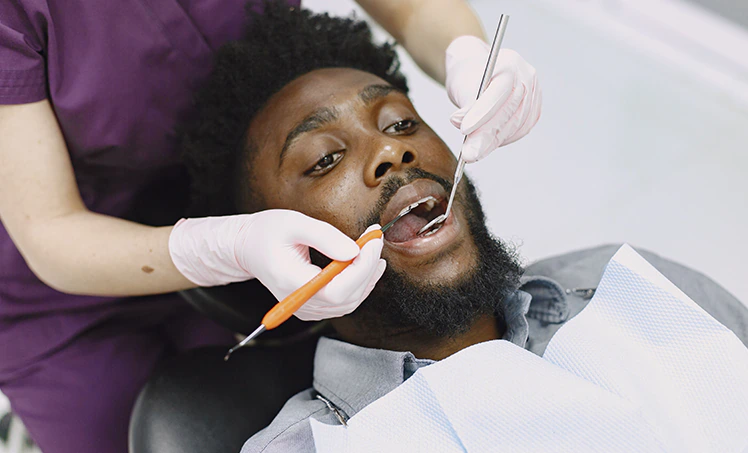

“Why am I getting cavities all of a sudden?” brings a lot of adults to my office for the first time, and it usually comes with a side of guilt.
Their brushing didn’t change. Something else did.
One woman in her forties went down my whole list with me and kept shaking her head, because she hadn’t changed her toothpaste, her diet, or a single prescription. Then I asked whether anything big had changed in the last year, and she laughed and said, “Well, I got married.” Her new husband hadn’t seen a dentist in a decade. (He booked a cleaning the next week. Romance is alive.)
Because something shifted the chemistry of your mouth, most often a drying medication, mouth breathing, or a change in how often you eat and drink.
Cavities in your 30s or 40s after a clean run since childhood are a signal. My job is to play detective, and guilt has no part in it. Here are the seven things I check, in the order I check them.
Saliva is the only thing standing between your enamel and the acid your plaque makes after every bite. When flow drops, the acid lingers and the minerals don’t come back.
Antihistamines, antidepressants, blood pressure pills, and ADHD stimulants all lower saliva flow.
If your first adult cavities showed up within a year of a new prescription, tell your dentist and your prescriber. Sometimes the timing or the drug can change.
This one sneaks up on adults. A new seasonal allergy can push you toward breathing through your mouth at night, and so can weight gain that narrows the airway.
Eight hours of air across your teeth leaves them bone dry, and dry teeth decay. Waking with a parched mouth or a sore throat is the tell.
How often something hits your teeth matters more than how much sugar is in it.
Working from home, a toddler’s snack schedule, or a new habit of nibbling through the afternoon means your mouth goes acidic every 20 minutes and rarely recovers.
Three meals with water in between gives enamel hours to remineralize. The same food spread across nine mini-snacks gives it none.
Your teeth can handle a cookie. What they can’t handle is a cookie every twenty minutes.
Sparkling water sits around pH 3 to 4, and kombucha goes lower. Both tend to get sipped for hours.
Lemon water for “detox” and iced coffee with flavored syrup do the same thing. None of these feel like candy, which is exactly why patients don’t mention them. And all of them dissolve enamel below the 5.5 threshold when they arrive constantly.
Drink them with meals, through a straw if you like, and go back to plain water in between.
Pregnancy brings morning sickness and cravings. Perimenopause and menopause drop estrogen, which thins the gum tissue and reduces saliva flow.
Women in both stages come in with new decay along the gumline and are stunned, because nothing they do on purpose has changed.
Clenching and grinding crack enamel in ways that trap plaque. Stress itself dries the mouth, and it nudges a lot of us toward snacks and wine.
If you wake with a tight jaw or a headache, that’s part of your cavity story too. Grinding often points to a narrowed airway during sleep, which sends you right back to number two.
Yes, really. Cavity-causing bacteria travel between people, and studies of couples show they share strains within months of living together.
A Dutch study estimated one ten-second kiss transfers about 80 million bacteria. If your new person has active decay or gum disease, their microbes are your microbes now.
This is a reason to get them in for a cleaning, and a lousy reason to stop kissing.
One more possibility deserves a mention: a new dentist.
Dentists vary in how they read X-rays. A shadow one clinician has watched calmly for five years can look like a filling waiting to happen to another.
Early lesions that haven’t broken through the enamel surface can often be monitored and remineralized without a drill. Ask to see the images, and ask which lesions have actually broken through. If six fillings appear out of nowhere, a second opinion is fair.
Finding the change stops new damage. It won’t erase a cavity that has already become a hole; those still need a dentist and, ideally, a small filling.
What you’re protecting is everything that hasn’t broken through yet, and that’s usually most of your mouth.
New adult cavities mean something changed the chemistry of your mouth, most often a drying medication or a new mouth-breathing habit, with grazing and acidic drinks close behind. Hormones and stress do it too, and so does a new partner’s bacteria. Find the change and reverse it, with hydroxyapatite toothpaste and xylitol as backup while you do. Cavities are a signal to read, and the fix usually lives upstream of the toothbrush.
Why am I getting cavities if I brush and floss every day? Because brushing and flossing only control part of the equation. Saliva flow, how often you eat, acidic drinks, medications, and mouth breathing all decide how long your teeth sit in acid. Great hygiene in a dry, frequently snacking mouth still loses. Look at what changed in your life over the last year or two.
Can sparkling water cause cavities? On its own, plain sparkling water is mildly acidic and far less of a problem than soda, but sipping it all day keeps your enamel bathed in acid with no break. Flavored versions with citric acid are worse. Drink it with meals, keep the sipping window short, and switch to plain water between.
Can a vitamin deficiency cause cavities? Mineral and vitamin status shape how well your teeth remineralize. Vitamin D helps you absorb calcium, and vitamin K2 helps direct it into teeth and bones. A deficiency rarely explains a sudden run of cavities by itself, and it can tip a mouth that’s already under pressure. Ask your doctor about testing vitamin D if you’ve never had it checked.
Should I get a second opinion if a new dentist finds lots of cavities? It’s completely reasonable. Ask to see the X-rays and photos, and ask which spots have broken through the enamel and which are early. Early, intact lesions can often be watched and remineralized. A good dentist will happily walk you through the images; that conversation alone tells you a lot.
Dr. Staci Whitman, DMD, FMCP, is a board-certified dentist and is certified in functional medicine. She is based in Portland, Oregon and is the author of SPIT (Crown, 2027).