Discover more from Dr. Staci on Substack.
Fix cavities, bad breath, receding gums, snoring, and hormones at the root. Weekly at-home tips from a board-certified dentist, because “brush, floss, and avoid sugar” were never the only answers. 🦷

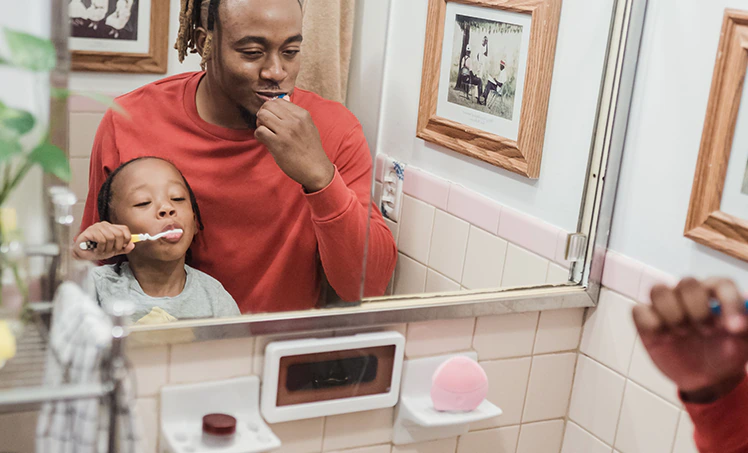

It says nothing about you. Learning how to brush toddler teeth comes down to two things, position and expectations, and once those change, the nightly fight usually shrinks to something you can live with.
Lie them down. Brushing a toddler’s teeth goes far better horizontally, with their head in your lap and you looking straight down into the mouth.
Standing over a toddler at the sink is the hardest setup there is. You can’t see, they can move, and everyone is tired.
For babies and young toddlers, sit on the floor or the couch with their head in your lap and their feet pointing away from you.
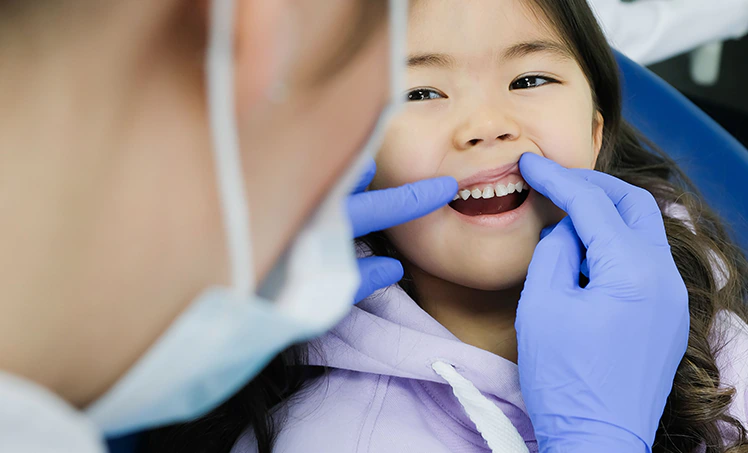
For a bigger child, try the knee-to-knee version with two adults. One adult holds the child facing them, then leans the child back into the second adult’s lap, and the second adult brushes. It’s the same position I use for exams in the office.
Flying solo? Sit on the floor with your toddler’s head between your thighs and their arms gently tucked under your legs. It’s undignified, and it works.
Lying down puts the lower lip and cheek right where your free finger can pull them out of the way, and the mouth tends to fall open on its own.
And if your toddler is crying? A crying toddler has the widest open mouth you’ll get all day. Use it, be quick, and be done.
Aim for the gumline and the back molars. Those two spots are where toddler cavities start, so 30 good seconds there beats two minutes of a brush waving around in the air.
Two minutes is aspirational with a 2-year-old anyway.
Here’s the map. Cavities in toddlers show up along the gums of the upper front teeth, where milk pools, and in the grooves of the molars and between them, where crackers and fruit stick.
Angle the bristles toward the gum and use small circles. Lift the upper lip to reach the front gumline, since that’s the spot most parents miss. Then scrub the chewing surfaces of every molar, especially the ones way in the back on top that nobody ever reaches.
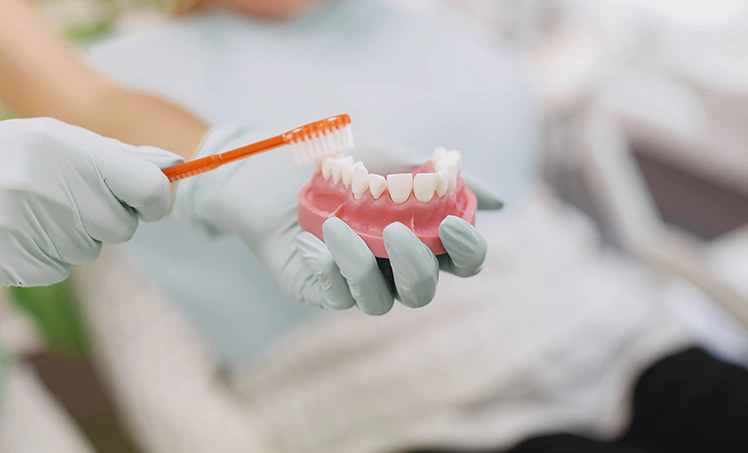
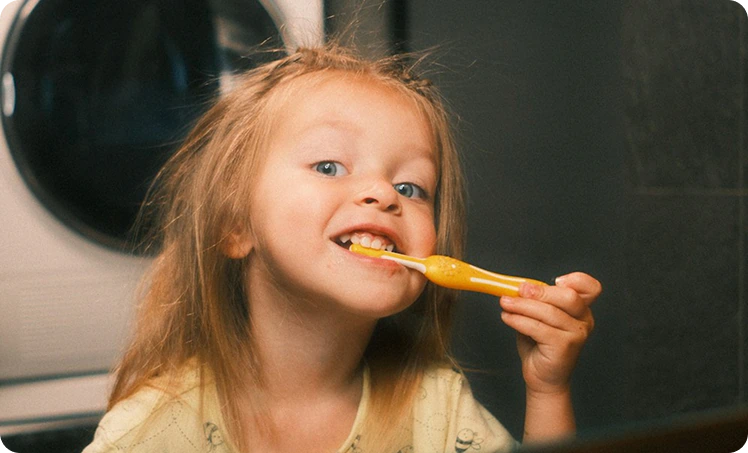
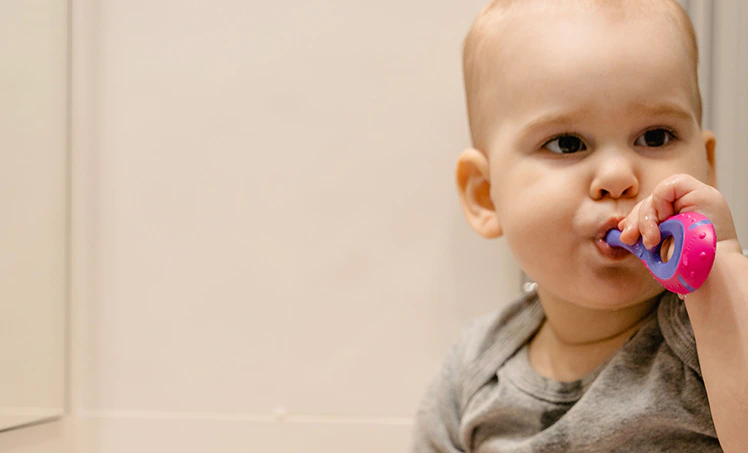
A soft, small-headed toddler toothbrush is all you need.
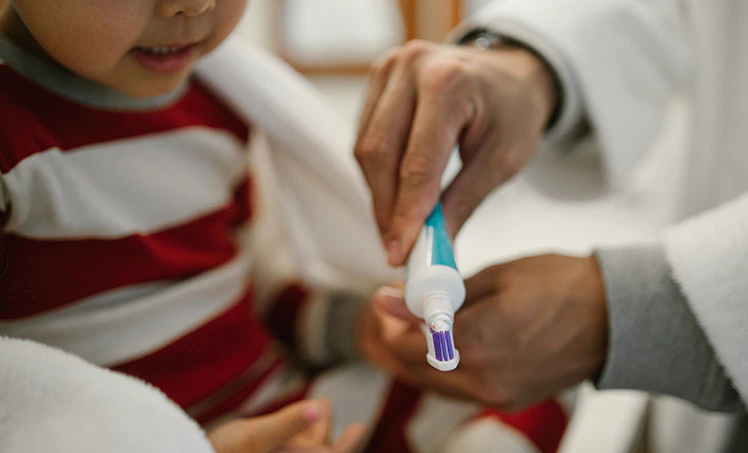
A smear the size of a grain of rice for children under 3, and a pea-sized amount from 3 to 6.
Hydroxyapatite toothpaste is my first pick for this age, because it remineralizes enamel and it’s safe to swallow. Boka and RiseWell both make versions for little ones. (#5 and #7 walk through how I choose.)
If you prefer fluoride, it works, and that rice-grain amount is the whole point, because a toddler can’t spit yet. Fluoride does its job topically, on the tooth surface, and you don’t want a toddler swallowing it.
Brush twice a day. But if you only get one good brush in, make it the one before bed.
Saliva flow drops way down while we sleep, and saliva is the mouth’s built-in rinse and repair crew. Whatever is left on the teeth at lights-out stays there for about ten hours. That’s a long, quiet night shift for the bacteria.
Longer than you think. Children don’t have the fine motor control to clean their own gumline until they can tie their shoes, which lands around age 7 or 8.
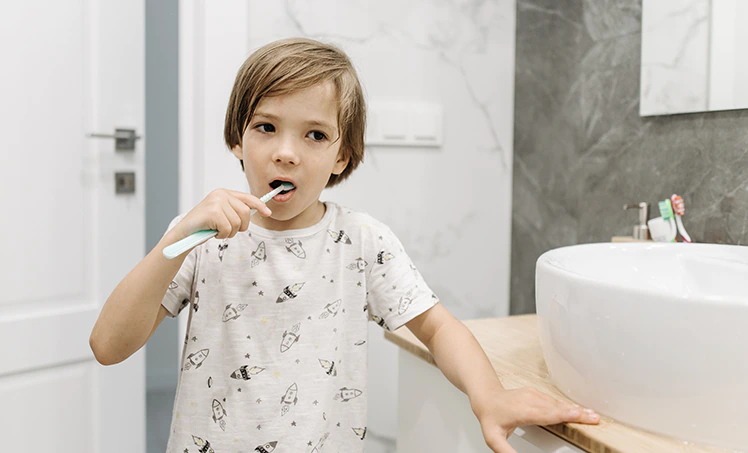
Until then, let your child “brush” first for practice and ownership. Then you go in and do the real one. Brushing baby teeth is a parent’s job for years, and that’s normal.
A few that parents tell me turn the nightly standoff around:
My favorite came from a mom whose son only opened wide for the zoo. She’d announce, “I think there’s a giraffe hiding behind that back tooth,” and he’d crank his mouth open to help her look. By the end of the week he was putting in requests for specific animals.
Toddlers want control. Small, real choices give them some, and the brushing still happens.
Perfect technique doesn’t cancel out all-day snacking and juice.
Every time a toddler eats or sips anything except water, the mouth turns acidic for 20 to 40 minutes. A child who grazes from breakfast to bedtime is basically living in acid, and no toothbrush can keep up with that.
If brushing is going well and the dentist still finds white spots, look at the sippy cup and the snack schedule before you blame your technique. #9 and #19 dig into that side.
How to brush toddler teeth: lie them down, aim for the gumline and back molars, and use a rice-grain smear of toothpaste under age 3. You’re the brusher until around age 7 or 8, and the bedtime brush counts most. The wrestling match is normal and temporary. Fewer snacks plus water in the cup do the rest.
Is it okay to hold my toddler down to brush their teeth? Gently securing arms and head so you can brush for 30 seconds is normal, and most dentists teach it. Keep your voice calm, keep it quick, and finish with a hug or a song so it ends on a good note. If every night feels like a battle, a sensory issue or a sore spot may be worth checking.
When should I start flossing my toddler’s teeth? Once two teeth touch, usually the back molars, floss that contact. A toothbrush can’t reach between touching teeth, and that’s one of the two spots toddler cavities love. Floss picks with a small handle make it easier to do one-handed while you hold a lip out of the way.
At what age can a child brush their own teeth? Children can start practicing as toddlers, but most can’t clean their own gumline well until around age 7 or 8, roughly when they can tie their shoes. Until then, let them go first, then you do a quick real brush, focusing on the back molars and the upper front gumline.
What if my toddler swallows toothpaste? With a rice-grain smear, swallowing is expected and that’s why the amount is so small. Hydroxyapatite toothpaste is safe to swallow. With fluoride toothpaste, stick to the rice-grain amount until your child can reliably spit, and keep the tube out of reach.
Dr. Staci Whitman, DMD, FMCP, is a board-certified dentist and is certified in functional medicine. She is based in Portland, Oregon and is the author of SPIT (Crown, 2027).