Discover more from Dr. Staci on Substack.
Fix cavities, bad breath, receding gums, snoring, and hormones at the root. Weekly at-home tips from a board-certified dentist, because “brush, floss, and avoid sugar” were never the only answers. 🦷



They don’t get one. I use an electric brush at home, I pack a manual one when I travel, and I have patients with beautiful gums in both camps.
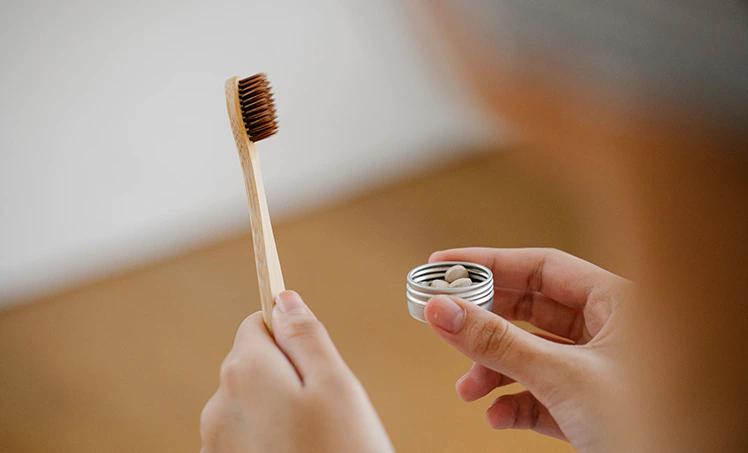
The manual brush rides in my bag next to a little jar of NOBS toothpaste tablets, which are fluoride-free, made with 5% nano-hydroxyapatite, and can’t leak all over a carry-on. You chew one, then brush.
A manual brush held at the gumline for two minutes beats a $300 sonic brush waved around the front teeth.
By a little. The best pooled evidence shows powered brushes remove somewhat more plaque and calm gums somewhat better than manual brushes, and the gap grows over time.
A 2014 Cochrane review pooled 56 trials with nearly 5,000 participants. Powered brushes reduced plaque about 11 percent more than manual brushes after one to three months, and gingivitis about 6 percent more.
After three months of use, the gap widened to roughly 21 percent for plaque and 11 percent for gingivitis.
Most of that evidence came from oscillating-rotating heads, the small round ones that spin back and forth. Sonic brushes have performed well in trials since.
Those numbers are real, and they’re modest. Eleven percent less plaque will not save a mouth that never sees floss, and it will not undo a habit of sipping kombucha all afternoon.
For most people, yes, because it makes the boring parts automatic.
What you’re really buying is consistency. The two-minute timer, the 30-second quadrant buzz, and the steady motion make it easier to do a decent job on a tired night.
And tired nights are where most cavities get their start.
Plaque collects in two places most people miss: the line where the tooth meets the gum, and the back molars. The bristles have to touch those spots to do anything at all.
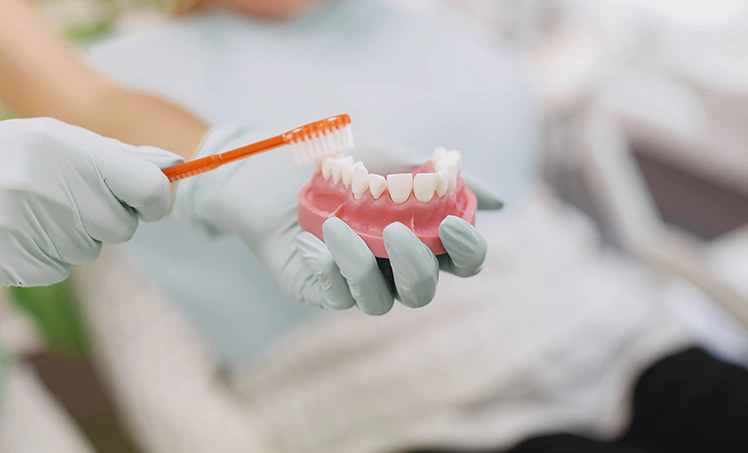
With a manual brush, angle the bristles 45 degrees toward the gumline. Make small, short strokes or tiny circles, a few teeth at a time, for two full minutes.
With an electric brush, the motion is already handled. Your job is to park the head on each tooth for a couple of seconds, tilted into the gumline, and let it work.
Scrubbing hard with a sonic brush is the most common mistake I see. You’re paying for a machine to do the motion and then fighting it.
Used gently, no. Pressure causes recession, and a good electric brush can protect you from your own heavy hand.
Hard brushing wears notches into roots and pushes gums into retreat, and recession does not grow back.
Many powered brushes now have a pressure sensor that lights up or slows down when you lean too hard, which is a very useful tattletale. This is where a lot of electric brushes earn their price.
Whichever brush you choose, use soft bristles. Medium and hard bristles have no job in a healthy mouth.
Both clean well when used properly, so pick the one whose feel you’ll tolerate every single day.
Oscillating-rotating heads have the deepest research base. Sonic brushes vibrate at high frequency and move fluid around the bristles, which likely helps a little in the spaces the bristles don’t quite reach.
If you wear braces, the small round oscillating heads tend to reach around brackets more easily.
Yes, children are first on my list. A brush with a timer and a little buzz turns a chore into something closer to a toy, and the head does the work small hands can’t coordinate yet.
The first time a toddler meets a buzzing brush, expect drama. I watched a two-year-old in my chair clamp his lips shut and glare at the thing like it had insulted his mother, and his dad looked at me and said, “See? This is every night.” My advice was to let him hold it, switched off, for a few days, buzz it on his own hand, then on Dad’s teeth, and only then on his.
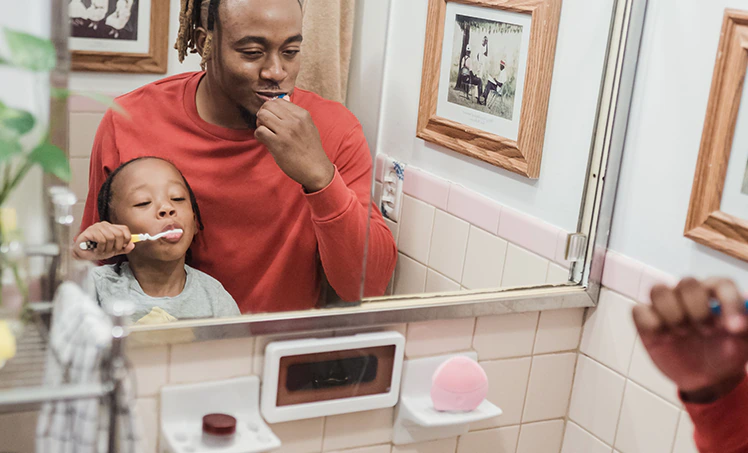
Parents still need to help. Most children don’t have the dexterity to brush well on their own until around the time they can tie their shoes, so you do a pass, and they do a pass.
Anyone with arthritis, a tremor, or limited dexterity will get a better clean with a powered brush.
Then there are the heavy-handed brushers, the ones whose gums are receding despite “brushing hard to be thorough.” They do better with a pressure sensor doing the nagging for them.
No brush, powered or not, cleans between your teeth, and that’s roughly 40 percent of each tooth’s surface. Floss or a water flosser has to happen.
And no brush overrides diet or breathing. A mouth that dries out all night from mouth breathing will grow plaque faster than any motor can remove it.
Electric wins the electric vs manual toothbrush contest on points, with about 11 percent less plaque and 6 percent less gingivitis in the Cochrane pooled data, mostly because it makes good technique easier. A manual brush used at the gumline with soft bristles for two minutes still does the job. Buy the one you’ll use every night, stop scrubbing, and floss either way.
How often should you replace an electric toothbrush head? Every three months, or sooner if the bristles splay. The rule is the same for a manual brush. Splayed bristles stop reaching the gumline, which is the whole point. Many electric brushes have indicator bristles that fade as they wear, and some newer handles will remind you. Swap after a cold or flu too, if it makes you feel better.
Is a cheap electric toothbrush as good as an expensive one? Mostly, yes. The features that matter are a two-minute timer, a quadrant buzz, a pressure sensor, and soft heads you can easily replace. Bluetooth apps, multiple modes, and travel cases are nice extras that don’t change the plaque numbers. A mid-priced brush used nightly beats a luxury one in the drawer.
Can you use an electric toothbrush with sensitive teeth? Yes, and it often helps. Sensitivity frequently comes from enamel wear or gum recession at the neck of the tooth, which hard manual brushing makes worse. Use a soft head, a gentle mode if your brush has one, and let the pressure sensor keep you honest. If sensitivity is new or sharp, get it checked.
How long should you brush with an electric toothbrush? Two minutes, twice a day, about 30 seconds per quadrant. That’s why the built-in timer is so useful; most people dramatically overestimate how long they brush. Glide slowly from tooth to tooth, pausing a couple of seconds on each, and angle the head into the gumline on the cheek and tongue sides.
Dr. Staci Whitman, DMD, FMCP, is a board-certified dentist and is certified in functional medicine. She is based in Portland, Oregon and is the author of SPIT (Crown, 2027).