Discover more from Dr. Staci on Substack.
Fix cavities, bad breath, receding gums, snoring, and hormones at the root. Weekly at-home tips from a board-certified dentist, because “brush, floss, and avoid sugar” were never the only answers. 🦷



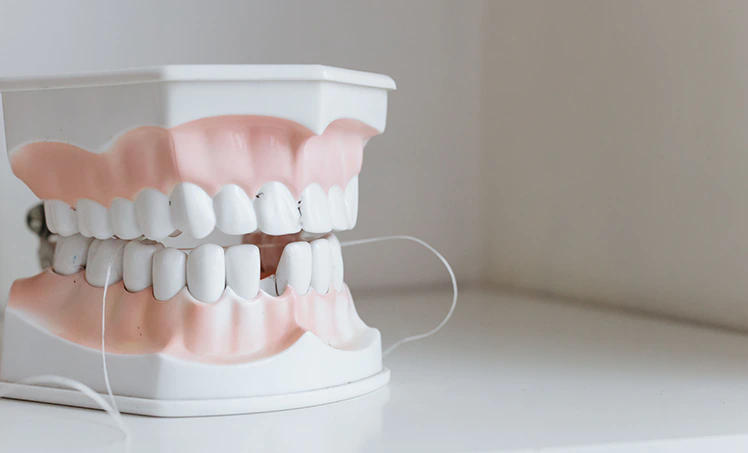
That image is the fastest way I know to explain gum disease and heart disease to a patient. Your gums and your arteries share one circulatory system, and what leaks into one shows up in the other. The research on this link is strong, and it’s also easy to overstate, so you’re getting both sides.
Gum disease and heart disease are strongly linked and share inflammation as a mechanism, but nobody has proven that one causes the other. That’s close to the American Heart Association’s position in its 2012 scientific statement, and I agree with it.
Pooled analyses of large cohort studies have found that people with periodontitis carry somewhere around 20 to 50 percent higher risk of coronary disease and stroke than people with healthy gums. That holds even after researchers control for smoking and diabetes.
Those adjustments matter. Gum disease and heart disease share a lot of causes, and a chunk of the association is people who smoke and eat poorly having trouble in both places.
But the association survives the adjustments, and there’s a mechanism to explain the rest.
Through bleeding gums. Every time inflamed gums bleed, oral bacteria slip into your bloodstream.
Researchers at Carolinas Medical Center showed in 2008 that ordinary toothbrushing pushes bacteria into the blood in a meaningful share of people with gingivitis. Most of those bacteria get cleared. Some don’t.
A University at Buffalo group found DNA from Porphyromonas gingivalis, the signature periodontal bug, inside atherosclerotic plaque pulled from human carotid arteries. Later work showed P. gingivalis can invade the cells lining blood vessels and stir up the inflammation that grows plaque.
Picture a bacterium that started its day between your molars and ended it inside your neck artery. That’s a commute.
Even without bacteria physically arriving in an artery, chronic gum infection keeps your immune system running hot.
People with untreated periodontitis run higher levels of C-reactive protein and interleukin-6, the same inflammatory markers cardiologists use to gauge heart risk. Multiple trials have shown that treating the gums brings CRP down within a few months.
Why does that matter? Inflammation is what makes an arterial plaque unstable and likely to rupture, which is the event behind most heart attacks.
A constantly inflamed mouth is a background contributor to that process. It’s hard to measure for any one person and easy to see across a population.
This is the quieter link, and honestly the one I find more fun.
Bacteria on the back of your tongue convert the nitrate in leafy greens and beets into nitrite. Your body turns that nitrite into nitric oxide, the molecule that relaxes blood vessels and lowers blood pressure.
Nathan Bryan’s work at Baylor and a 2019 study on chlorhexidine mouthwash showed that wiping out those bacteria measurably raised blood pressure.
Oral health and heart health run in both directions. Sick gums send inflammation out, and a healthy oral microbiome sends nitric oxide out. Antiseptic mouthwash sabotages the good half of that trade.
Not on its own, as far as the trials show. A deep cleaning will not lower your LDL, and healthy gums do not cancel out a statin conversation or a family history.
The trials that tried to prevent cardiac events with periodontal treatment alone have not shown it. Part of the reason is scale: heart disease is built over decades, and a few months of gum therapy is a small input.
Think of your mouth as one lever among several, and pull all of them.
Treat bleeding gums as a vital sign, the same way you’d treat a blood pressure reading.
A man in his late fifties once told me, mid-cleaning, “My gums have always bled. That’s just how I’m built.” His pockets were deep, and they bled when the probe barely touched them. When he mentioned his dad’s bypass surgery at 60, I wrote a note to his primary care doctor. At his next visit he told me he’d had his first real cardiac workup, and that his doctor had asked about his gums.
Floss daily (the bleeding stops within a week or two of consistent care) and brush at the gumline with a soft brush. Scrape your tongue instead of rinsing with something that kills everything.
Get a periodontal exam with pocket measurements. Periodontitis is painless until it’s advanced, and if you have pockets, treat them.
Eat your nitrate. Arugula and beets feed the blood-pressure bacteria, which is the most delicious cardiology advice you will get this year.
And if you already have cardiovascular disease, tell your dentist. Your gum health belongs in your cardiac risk picture, and your cardiologist may not think to ask.
Gum disease and heart disease are strongly associated, and the mechanism is shared inflammation plus oral bacteria that get into the bloodstream and, sometimes, into arterial plaque. Causation is unproven, so treat your gums as a heart risk factor you actually control. Stop the bleeding, protect the tongue bacteria that make nitric oxide, and manage your heart the conventional ways too.
Does flossing help prevent heart disease? Flossing stops gum bleeding, and bleeding gums are how oral bacteria get into your blood and how gum inflammation stays switched on. No trial has shown flossing alone prevents heart attacks. But it lowers a risk factor you control, and treating gum disease has been shown to bring inflammatory markers like CRP down.
Can mouthwash raise your blood pressure? Antiseptic mouthwash can. A 2019 study on chlorhexidine found that wiping out the tongue bacteria that turn dietary nitrate into nitric oxide measurably raised blood pressure. If your heart is on your mind, scrape your tongue and floss instead of rinsing with something that kills everything.
Should I tell my dentist I have heart disease? Yes. Your gum health belongs in your cardiac risk picture, and your dentist can measure gum pockets that nobody else is checking. It also helps your dentist plan treatment safely around your medications. Your cardiologist may not ask about your gums, so you might have to connect those two dots yourself.
What are signs gum disease is affecting your health? Gum disease is often silent until it’s advanced, so the signs to catch early are local: gums that bleed when you brush or floss, puffiness, recession or persistent bad breath. A periodontal exam with pocket measurements is the only way to know where you stand. Higher CRP on blood work is another reason to ask.
Dr. Staci Whitman, DMD, FMCP, is a board-certified dentist and is certified in functional medicine. She is based in Portland, Oregon and is the author of SPIT (Crown, 2027).