Discover more from Dr. Staci on Substack.
Fix cavities, bad breath, receding gums, snoring, and hormones at the root. Weekly at-home tips from a board-certified dentist, because “brush, floss, and avoid sugar” were never the only answers. 🦷


Here is the better news about receding gums. You can stop them from retreating any further, which is most of the battle. And if a root is exposed enough to bother you, a periodontist can cover it with a graft that looks and works like the original.
The first step is figuring out why the gum left, because the cause decides the fix.
The most common cause I see is brushing too hard with a brush that is too stiff. The second is gum disease.
Gum tissue is thin. Years of scrubbing back and forth with medium bristles wears it down the way a river wears a bank, slowly and very thoroughly.
With gum disease, inflammation under the gumline dissolves the supporting bone, and the gum follows the bone down.
Those two look different in the mouth. Overbrushing recession looks clean and healthy, with no bleeding. Disease recession comes with puffy, bleeding tissue and deeper pockets.
There’s a longer list behind those two, and most people have more than one thing going on:
The combination I see over and over in the chair is the last one people suspect. A woman in her early 30s came in worried about one lower front tooth that “looked longer every year.” She brushed gently and her gums barely bled. When I pulled her lower lip down, the little band of tissue connecting lip to gum went taut and blanched the gum right at that tooth. She also admitted she woke up every morning with her lips stuck to her teeth. A tight frenum and an open mouth at night had been tag-teaming that one spot for years.
No. Once gum tissue is gone, the body does not regenerate it in that spot. Surgical coverage, though, works well and has for decades.
A connective tissue graft takes a small piece of tissue from the roof of your mouth and tucks it over the exposed root. It remains the gold standard for coverage that lasts.
The pinhole surgical technique, developed by Dr. John Chao, loosens the existing gum through a tiny entry point and slides it down over the root with no incisions or stitches. For the right cases, that means faster healing.
Tunnel techniques and donor tissue options exist too, so giving up a piece of your palate only happens when it is truly the best choice for your mouth.
Not always. If the exposed root is stable, and it isn’t sensitive or collecting decay, monitoring is a reasonable plan.
A dentist can also bond a thin layer of tooth-colored material over a sensitive root to seal it. That protects the root without any gum surgery.
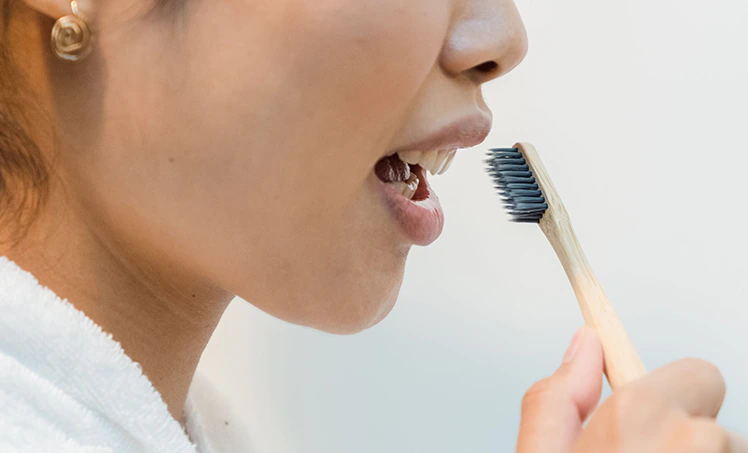
Change the brush first. Use an extra-soft brush held like a pencil, with your fingertips, and angle it into the gumline with small circles and almost no pressure. If your grip looks like you’re starting a lawnmower, that’s the problem.
Get a pressure sensor if you go electric. The Oral-B and Philips Sonicare models both flash or stall when you push too hard, which is a little humbling and very useful.
Treat any inflammation, because bleeding gums recede faster.
Protect against the hidden forces. Wear a night guard if you grind, and ask about a frenectomy if a frenum is pulling.
Breathe through your nose at night, which keeps the tissue hydrated while you sleep.
Calm the zing. For exposed roots that zing with cold, a hydroxyapatite toothpaste like Boka or RiseWell plugs the open dentin tubules with the same mineral the tooth is made of. Most people notice relief within a couple of weeks.
They can make your gums feel better, and they cannot move the gumline back up.
No toothpaste, oil, rinse or supplement regrows gum tissue. Products sold for gum regrowth are usually anti-inflammatory or desensitizing, which can make gums healthier and less sore. That is a fine thing to buy. Just buy it for the right reason.
Anything in a tube that promises regrowth is selling you comfort, which is worth something. Regrowth is the part it can’t deliver.
Receding gums stay receded, and you can stop the retreat by fixing the cause: a softer brush and lighter hand, treating gum inflammation, a night guard for grinding and nasal breathing at night. If an exposed root bothers you or keeps getting worse, a graft or pinhole procedure covers it for the long term.
Can you reverse receding gums naturally? You can stop recession naturally, and you can’t regrow the lost tissue. Switching to an extra-soft brush, using a light grip, treating gum inflammation and breathing through your nose at night all slow or halt the slide. Covering a root that is already exposed takes a graft or the pinhole technique from a periodontist.
Is pinhole surgery better than a gum graft? They suit different cases. A connective tissue graft is still the gold standard for long-lasting coverage. The pinhole surgical technique, developed by Dr. John Chao, slides existing gum over the root with no incisions or stitches, so healing tends to be faster. A periodontist can tell you which one your tissue and recession pattern support.
Why are my gums receding in my 20s or 30s? At younger ages, the usual suspects are aggressive brushing with a stiff brush, a thin gum biotype, past orthodontic movement, grinding and mouth breathing. Gum disease can show up early too. A dentist can tell from how the tissue looks whether it is mechanical wear or inflammation, and that decides the fix.
Does oil pulling help receding gums? Oil pulling won’t regrow gum tissue. If it helps you keep plaque and inflammation down, it may make your gums feel calmer, and that is a reasonable reason to do it. Pair it with the fixes that actually stop recession: a soft brush, a light grip and treating the cause.
Dr. Staci Whitman, DMD, FMCP, is a board-certified dentist and is certified in functional medicine. She is based in Portland, Oregon and is the author of SPIT (Crown, 2027).