Discover more from Dr. Staci on Substack.
Fix cavities, bad breath, receding gums, snoring, and hormones at the root. Weekly at-home tips from a board-certified dentist, because “brush, floss, and avoid sugar” were never the only answers. 🦷

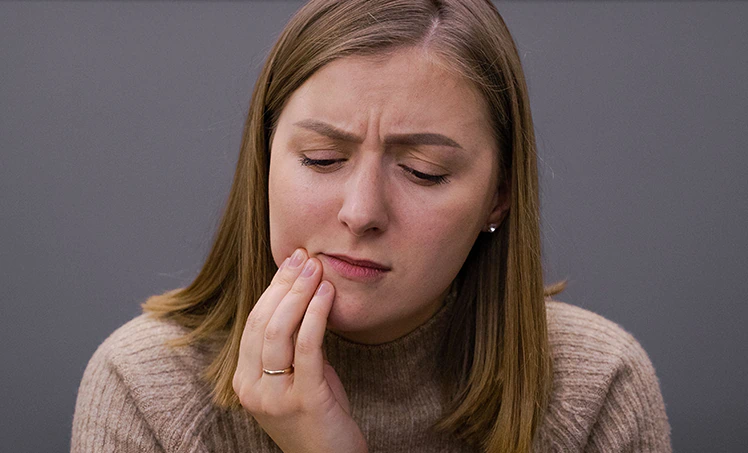

“Why are my teeth sensitive all of a sudden?” is one of the top three questions I hear. The quick answer: something has exposed the dentin under your enamel, and dentin is wired to the nerve.
The longer answer is the useful one, because sensitive teeth have five or six common causes, and the fix depends on which one you’ve got.
Cold makes fluid shift inside tiny tubes in your dentin, and that movement tugs on the nerve. It only happens once the dentin is exposed.
Enamel has no nerves, which is why you can chew ice without pain when it’s intact.
Beneath it sits dentin, a living tissue shot through with microscopic tubules, tens of thousands per square millimeter. Each one is filled with fluid and connected to the pulp at the center of the tooth.
When cold hits exposed dentin, the fluid in those tubules contracts and shifts. That tiny movement tugs on nerve endings at the pulp end.
This is the hydrodynamic theory, worked out by Martin Brännström in the 1960s. It also explains why sensitivity feels like a sudden zing instead of an ache.
Tooth sensitivity is a pressure signal racing down a fluid-filled straw.
Usually gum recession or acid erosion. Hard brushing, grinding, a new cavity, or a crack round out the list.
Gum recession is the biggest one. Roots are covered by thin cementum, with no enamel shell, and that cementum wears off fast once the gum pulls back.
Acid erosion comes next, and I see more of it every year. Sparkling water, kombucha, lemon water, and silent reflux all sit below the pH where enamel dissolves.
Silent reflux is the sneaky one. When I ask about heartburn, people almost always say, “Nope, never,” and then a few questions later: “Well, I do wake up with a sour taste sometimes,” or, “I clear my throat a lot in the morning, but that’s just allergies.” Meanwhile the tongue side of their upper teeth is worn glassy smooth, right where that acid lands while they sleep.
Hard scrubbing with a stiff brush wears notches into the necks of the teeth, right where they meet the gum.
Grinding and clenching flex the teeth until the enamel at the gumline chips away in little wedge-shaped defects.
And sometimes a sensitive tooth is a new cavity or a hairline crack. That’s why I want to look before you self-treat.
Two steps: plug the open tubules, then remove whatever opened them. Skip the second step and they reopen.
This is where hydroxyapatite toothpaste shines. The particles are the same mineral your dentin is made of, and they physically fill in the open tubule mouths.
Italian trials from around 2014 through 2018 found nano-hydroxyapatite paste relieved sensitivity as well as or better than the standard desensitizers.
Brush with it twice a day. For a bad spot, rub a dab on with a fingertip at bedtime and leave it there overnight.
Potassium nitrate pastes take a different route. They calm the nerve itself and leave the tubules open, and they need a few weeks to kick in.
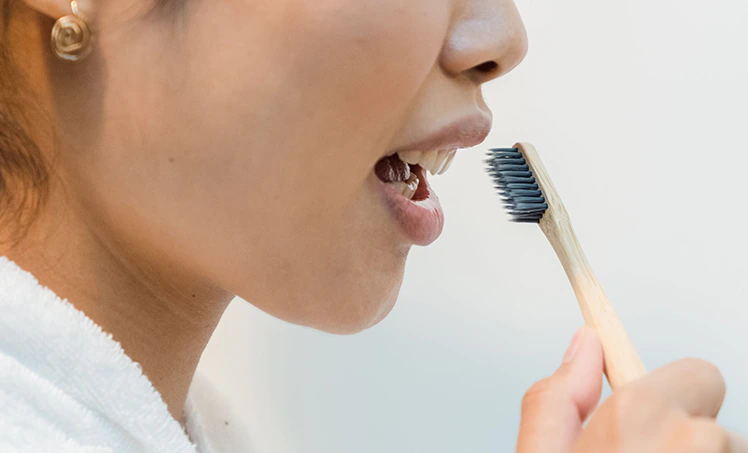
Switch to a soft brush and light pressure. Hold it like a pen, and never like a hammer.
Cut the acid habit, or contain it. Drink the sparkling water with a meal, rinse with plain water or a pinch of baking soda afterward, and wait 30 minutes before brushing so you’re not scrubbing softened enamel.
If you wake with a sore jaw, or your partner hears grinding, ask about a night guard. More importantly, ask about your breathing during sleep, since grinding often rides along with a narrowed airway.
If heartburn or a sour morning taste is part of the picture, treat the reflux. Your teeth won’t recover while acid keeps arriving from below.
For exposed roots that stay sensitive despite all of this, a dentist can seal the surface with a varnish or a thin layer of bonding. Significant recession can be covered with a gum graft.
Sometimes, but rarely if the cause is still there. Most sensitivity settles down in two to four weeks once the tubules are plugged and the acid stops.
If you change nothing, the dentin stays exposed, and the zing stays with it.
A sharp pain when you bite down on something and release it points to a cracked tooth.
Pain that lingers for more than a few seconds after heat, or that wakes you at night, points to an inflamed nerve that may need a root canal.
Sensitivity from exposed dentin is quick and cold-triggered, and it disappears the moment the cold is gone. If yours behaves differently, skip the toothpaste aisle and book an exam.
Your teeth are sensitive because something has exposed the dentin and its fluid-filled tubules, most often gum recession or acid erosion. Plug the tubules with hydroxyapatite toothpaste, go soft on the brush, and stop the acid or reflux that’s thinning your enamel. If the pain lingers or shows up when you bite, that’s a crack or a nerve problem, and it needs a dentist.
How long does sensitive toothpaste take to work? Hydroxyapatite works by physically filling the tubules, so many people notice relief within days to a couple of weeks of twice-daily brushing. Potassium nitrate pastes work on the nerve and usually need two to four weeks. Either way, don’t rinse right after brushing; spit and leave the paste on your teeth.
Can teeth whitening cause sensitivity? Yes, very commonly. Peroxide passes through enamel into the dentin and irritates the nerve, which is why sensitivity often shows up during a whitening course. It usually fades within a few days of stopping. Using a hydroxyapatite toothpaste before and during whitening, and choosing gentler, lower-strength products, can make a big difference.
Why is only one tooth sensitive to cold? A single sensitive tooth deserves a closer look than general sensitivity. It can be a spot of recession or a worn notch, but it’s also the classic signal of a new cavity, a leaking old filling, or a crack. If one tooth keeps zinging for more than a week or two, get it checked.
Is it bad to keep using a straw for cold drinks if my teeth are sensitive? A straw is a perfectly good workaround. It sends cold and acidic drinks past your front teeth and reduces contact time, which helps both the zing and the erosion. Just treat it as a bandage while you plug the tubules and deal with the cause underneath.
Dr. Staci Whitman, DMD, FMCP, is a board-certified dentist and is certified in functional medicine. She is based in Portland, Oregon and is the author of SPIT (Crown, 2027).