Discover more from Dr. Staci on Substack.
Fix cavities, bad breath, receding gums, snoring, and hormones at the root. Weekly at-home tips from a board-certified dentist, because “brush, floss, and avoid sugar” were never the only answers. 🦷

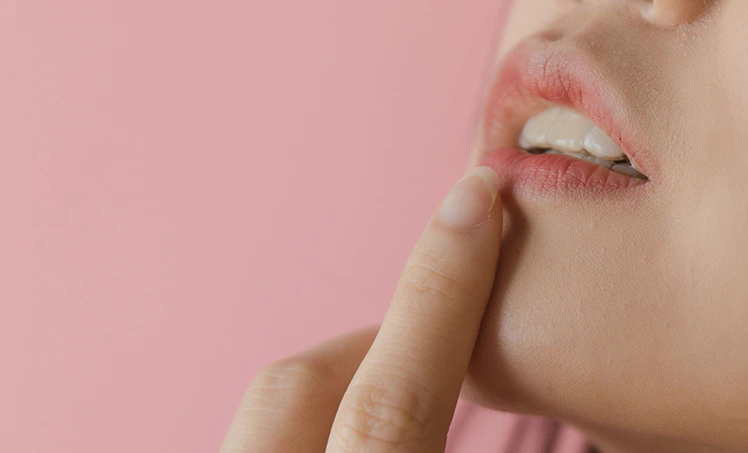

Canker sore causes are more specific than “stress, I guess,” and most of them are things you can change at the drugstore or the grocery store. I see these little craters in patients of every age, and the fix often starts with reading the back of a toothpaste tube.
If it’s inside your mouth, it’s almost certainly a canker sore. If it’s on the outside of your lip, it’s a cold sore. They get mixed up constantly, and the treatment is different, so this matters.
A canker sore (the medical name is an aphthous ulcer) lives on soft, movable tissue like the inner cheek or under the tongue. It looks like a small round crater with a white or yellow center and a red halo, and it stings the second anything salty or acidic touches it. It is not contagious. You cannot give one to your child by sharing a spoon.
A cold sore is a different animal. The herpes simplex virus causes it, and it starts as a cluster of tiny blisters on the lip that tingle before they crust over. That one needs an antiviral conversation with your doctor. Everything below is about the inside-the-mouth kind.
Usually because one or two of the same few triggers keep firing. Nobody has found a single cause, which is annoying, but a short list shows up over and over in the research and in my chair.
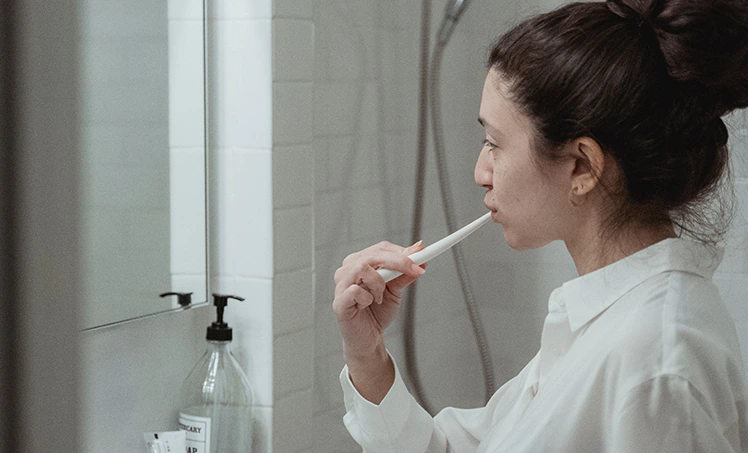
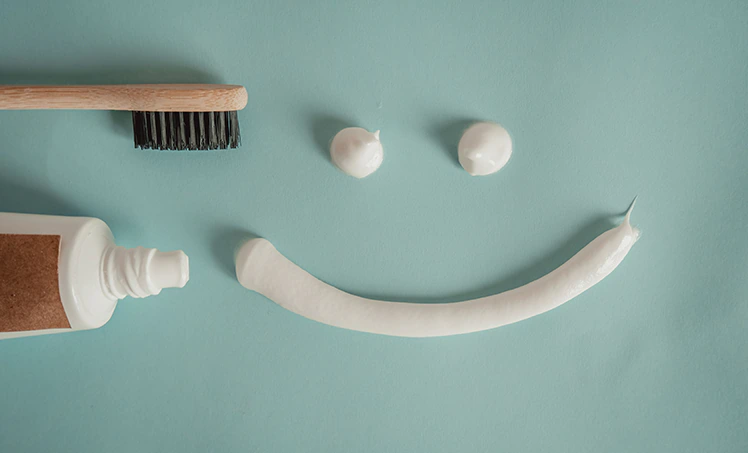
The one I ask about first is sodium lauryl sulfate, the foaming agent in most conventional toothpaste. SLS strips the protective mucin layer off the lining of your mouth. Think of mucin as the cling wrap over your cheeks; take it off and every chip and citrus slice gets direct access to raw tissue.
I once had a woman in her thirties run her tongue over a fresh crater on her inner cheek and tell me, “I’ve had one of these basically every month since college.” I asked which toothpaste she used, she named a big-brand whitening paste, and we swapped it for an SLS-free one that day. Six months later she pointed at her cheek before I’d even sat down and said, “Nothing. Not one.”
Several small trials, starting with work out of the University of Oslo in the 1990s, found fewer ulcers when people switched to an SLS-free toothpaste. A 2019 pooled analysis agreed on ulcer count and pain, though not everyone responds.
It costs nothing to try, and the hydroxyapatite pastes I like anyway (Boka and RiseWell, for example) skip SLS.
This is the one people search for most: “what deficiency causes canker sores?” Low B12, iron, folate or zinc all show up more often in people with recurrent sores.
My favorite study here is a 2009 Israeli trial that gave people a nightly sublingual B12 dose. Outbreaks dropped even in people whose blood levels looked fine on paper. Your lab range and your mouth do not always agree.
This is also why canker sores are a known oral sign of celiac disease. A gut that cannot absorb nutrients leaves the mouth short, and the mouth is usually where the shortage shows first. It’s the oral-systemic connection at its most literal: the mouth is the front door of the gut, and it tattles.
Then add the rest of the usual suspects. Stress raises cortisol, which dampens the immune response in the lining of your mouth. Minor trauma counts too, like a cheek bite or a sharp tortilla chip. And many women notice sores in the days before their period, during the hormonal dip.
One more, and this is rare: mouth ulcers that come with genital ulcers or eye inflammation point to a different condition called Behçet’s, which needs a rheumatologist.
A canker sore heals on its own in seven to ten days. Your job is to make those days less miserable and shorten them where you can.
Rinse with warm salt water, or a half teaspoon of baking soda in a cup of water, a few times a day. That calms the pH and keeps the crater clean.
After rinsing, dab on raw honey. A small randomized study from Saudi Arabia found honey shortened healing time and pain compared with a steroid paste, which is a delightful result for something already sitting in your pantry.
And skip the citrus and hot sauce until it closes. Acid on an open ulcer is the sting you already know about.
Play detective. The sore in front of you is a clue about the next one.
Switch to an SLS-free toothpaste for three months and watch whether the sores thin out. Ask your doctor for ferritin, B12, folate and zinc levels. If your sores come with bloating or fatigue, ask about celiac testing before you cut gluten, because the test only works while you are still eating it.
A new toothpaste will not help if your sores come from a nutrient deficiency or an undiagnosed gut condition, and it will do nothing for a cold sore.
And any sore that lasts more than two weeks or feels hard at the edges needs eyes on it. Most of those are still benign, but oral cancer screening is part of my job, and a persistent ulcer is one thing I never let slide.
Canker sore causes come down to a short list: the detergent in your toothpaste, low iron or B12, a gut that is not absorbing well, stress, and the occasional cheek bite. Find out which one is yours instead of accepting a monthly crater. Salt water, honey and an SLS-free paste handle the sore in front of you; a blood panel and a hard look at your gut handle the next one.
How long does a canker sore last? Most minor canker sores heal in seven to ten days without any treatment. Salt water rinses, honey and avoiding acidic foods make that week much easier. If one hangs around past two weeks, feels hard at the edges, or keeps coming back in the same spot, book a visit so a dentist can take a proper look.
Can a new toothpaste cause canker sores? It can, if the new paste contains sodium lauryl sulfate and your old one did not. SLS strips the protective mucin layer from the lining of your mouth, leaving it easier to injure. If sores started after a toothpaste switch, go SLS-free for three months and see whether they settle down.
Are canker sores a sign of something serious? Usually they are a sign of something fixable, like low B12 or iron or an SLS toothpaste. Frequent sores can also be an early clue to celiac disease, and sores alongside genital ulcers or eye inflammation point to Behçet’s. A sore lasting over two weeks deserves an exam to rule out anything more serious.
Does B12 help canker sores even if my levels are normal? In a 2009 Israeli trial, a nightly sublingual B12 dose cut outbreaks even in people whose blood levels looked fine. One trial proves little on its own, and this is still a low-risk experiment to run with your doctor, especially if your sores keep coming back.
Dr. Staci Whitman, DMD, FMCP, is a board-certified dentist and is certified in functional medicine. She is based in Portland, Oregon and is the author of SPIT (Crown, 2027).