Discover more from Dr. Staci on Substack.
Fix cavities, bad breath, receding gums, snoring, and hormones at the root. Weekly at-home tips from a board-certified dentist, because “brush, floss, and avoid sugar” were never the only answers. 🦷

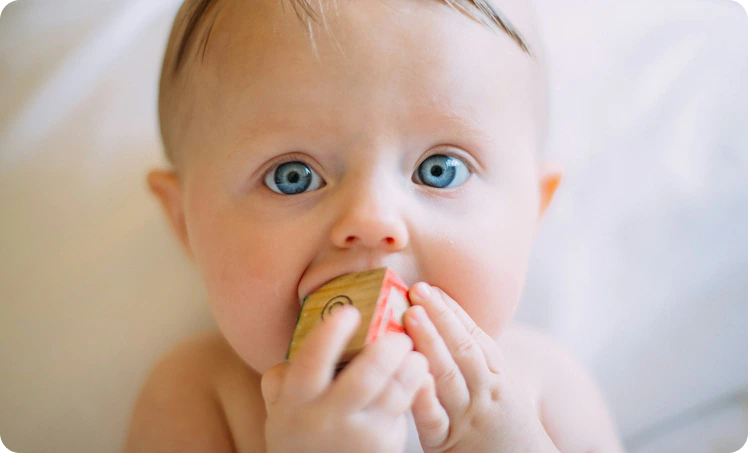

Sometimes the group chat is right. Teething symptoms are real. But teeth also get blamed for a long list of things they had nothing to do with, and I want you to be able to tell the difference, so you can soothe the gums and still catch the stuff that belongs with your pediatrician.
Most babies cut their first tooth between 5 and 8 months, according to the American Academy of Pediatric Dentistry’s eruption chart, and it’s usually one of the two bottom front teeth.
Some babies start at 3 months. A few hold out until their first birthday or later, which is also normal, and the timing often runs in families (ask your mom when you got yours). By about age 3, all 20 baby teeth are in. That’s roughly two and a half years of on-and-off gum drama, so pace yourself.
The fussiness usually shows up a few days before a tooth breaks through and settles once it’s out. The baby teeth chart in #2 has the full arrival order.
The classic teething symptoms are drool, chewing on everything within reach, and a baby who is crankier and clingier than usual.
You might also see a puffy, reddish spot on the gum where the tooth is headed, a rash on the chin from all that drool, a little less interest in solids, and some extra night waking.
Night waking is the one parents feel in their bones, and it’s legitimate. A gum being pushed open from underneath aches more when a baby is lying flat in a dark room with nothing to distract them. By day there are toys and the dog; at night there’s just the tooth.
The best evidence we have here comes from a 2016 review in Pediatrics by Massignan and colleagues in Brazil. They pooled the research and found that gum irritation, irritability, and drooling were the most consistent signs, and that body temperature can tick up slightly on the day a tooth erupts.
“Slightly” is doing a lot of work in that sentence. The same review found that teething does not produce a true fever.
No. A small bump in temperature, something like 99 point something, can happen right around eruption. A fever of 100.4°F (38°C) or higher is a different situation and deserves a call to your pediatrician.
The reason teeth take the blame is pure bad timing. The first teeth tend to arrive around 6 months, which is right when the antibodies your baby got from you in the womb are wearing off. Your little one is suddenly catching first colds and first ear infections, and the calendar makes it look like the tooth did it.
Here’s my rule of thumb: teeth live in the mouth, and their symptoms mostly stay there too. Drool, chewing, sore gums, a grumpy mood, and a slightly warm forehead all fit.
These don’t fit, and they get a call to the pediatrician instead of a teether:
None of these mean you did anything wrong. A separate problem just happens to share a calendar with the teeth.
Cold and pressure are the two things that reliably help.
A clean finger rubbing the gum firmly works surprisingly well, and so does a washcloth chilled in the fridge, a chilled silicone teether, or nursing, which delivers sucking comfort and closeness in one move. For babies already on solids, a cold spoonful of puree counts too.
One small but useful detail: chilled in the fridge, not frozen solid. A frozen teether is hard enough to bruise a gum that’s already sore.
On a genuinely rough night, a weight-based dose of acetaminophen is reasonable, or ibuprofen once your baby is past 6 months. Get the dose from your pediatrician rather than the box, because babies are dosed by weight and the box is guessing.
Benzocaine gels like Orajel. The FDA issued a warning in 2018 because benzocaine can cause methemoglobinemia, a blood condition that reduces how much oxygen gets delivered to tissues, in children under 2.
Amber teething necklaces. The claim is that the amber releases succinic acid that eases pain. There’s no evidence for that, and the necklaces carry a real strangulation and choking risk. The FDA warned about these in 2018 as well.
I once had a dad bring his 9-month-old in wearing one, a sweet little strand of honey-colored beads. “My mother-in-law swears by it,” he said, already a little sheepish. I asked whether the beads could retire to the baby book as a keepsake, and he grinned and said, “Great. You’re telling her.”
Homeopathic teething tablets. The maker of Hyland’s teething tablets recalled them in 2017 after the FDA found inconsistent amounts of belladonna in them.
Teething biscuits and rusks. These are starch that turns to paste on brand-new enamel and sits there feeding bacteria, so I’d pass. A first tooth deserves better than a first cavity.
Teething does not cause high fever, diarrhea, ear infections, a runny nose, or a baby who won’t eat at all.
I say this kindly, because every tired parent reaches for the easiest explanation, me included. “It’s just teeth” is a comforting sentence at 2 a.m. It’s also the sentence that can delay a needed visit by a few days, and a baby with a real ear infection deserves to be seen.
Teeth can make a baby miserable for a few days. A real fever comes from somewhere else.
Teething symptoms are drool, chewing, sore puffy gums, and a cranky baby with a slightly warmer forehead, usually starting between 5 and 8 months and finishing around age 3. Cold and pressure help most. Benzocaine gels, amber necklaces, homeopathic tablets, and teething biscuits are worth skipping. A true fever of 100.4°F or higher, diarrhea, or vomiting gets a call to the pediatrician, because teeth don’t do that.
How long do teething symptoms last for each tooth? For most babies, the rough patch runs a few days before a tooth breaks through and eases once it’s out. If your baby seems miserable for weeks with no tooth in sight, it’s worth looking for another cause, like an ear infection or a sleep issue, rather than waiting on a tooth that may be months away.
Does teething cause diarrhea? The research doesn’t support it. True diarrhea points somewhere else, usually a virus, and babies this age put everything in their mouths, so they pick up a lot of bugs right as the first teeth arrive. Call your pediatrician, especially if your baby isn’t keeping fluids down or has fewer wet diapers.
Can teething make my baby wake up all night? It can add extra night waking, especially in the few days before a tooth erupts, since gums ache more lying flat. If the waking lasts for weeks, or comes with snoring, mouth breathing, or restless sleep, mention it to your pediatrician or dentist. Those can point to airway or feeding issues worth checking.
Is it safe to use a frozen teething ring? Chilled beats frozen. A teether straight from the freezer is hard enough to bruise sore gums. Pop a silicone teether or a damp washcloth in the fridge instead; it stays cool and firm, which is exactly the cold-plus-pressure combination that works, without the sting.
When should my baby’s first tooth come in if it hasn’t yet? Plenty of babies don’t get a first tooth until around their first birthday, and that’s within normal. Timing often runs in families, so ask the grandparents what happened with you. If you’re past the first birthday and still waiting, bring it up at your child’s first dental visit, which ideally happens by age 1 anyway.
Dr. Staci Whitman, DMD, FMCP, is a board-certified dentist and is certified in functional medicine. She is based in Portland, Oregon and is the author of SPIT (Crown, 2027).