Discover more from Dr. Staci on Substack.
Fix cavities, bad breath, receding gums, snoring, and hormones at the root. Weekly at-home tips from a board-certified dentist, because “brush, floss, and avoid sugar” were never the only answers. 🦷

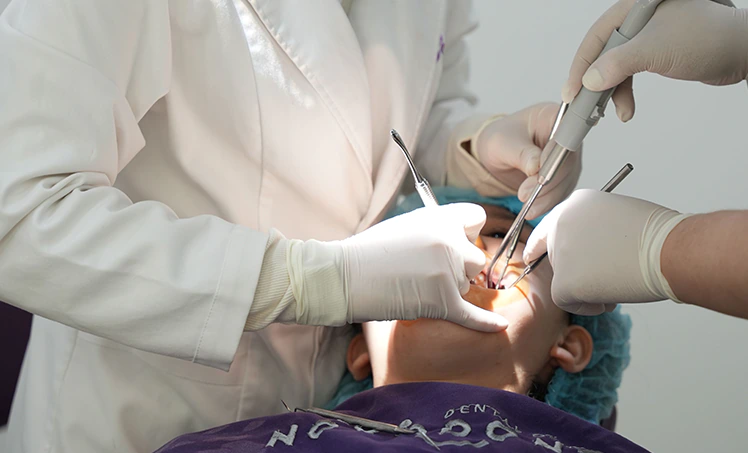

Parents ask me “when do children lose teeth?” constantly, and the answer is a range: the first tooth usually goes around age 6, and anywhere from 4 to 8 is normal. The order matters more than the birthday. And what is happening under the gums is slower and much stranger than most of us remember from our own tooth-fairy years.
The first tooth to fall is almost always one of the two lower front teeth, the lower central incisors. Usually it is the very same tooth that showed up first back in babyhood.
That is the rule of thumb for the whole process: teeth leave in roughly the order they arrived. First in, first out, like a polite dinner party.
The upper front teeth follow a few months after the lower ones. Then the lateral incisors, the slim teeth on either side of the front pair, go somewhere around ages 7 to 8.
After a quiet stretch, a second wave starts around age 9 and runs to about 12. This is when the canines and the baby molars go, and the second baby molars (the big ones way in the back) are usually the last to leave, somewhere between 9 and 13 according to the American Academy of Pediatric Dentistry’s chart.
Girls tend to run a bit ahead of boys. A child who got their baby teeth early usually loses them early too, which is a nice thing to know if you are comparing your second grader to the one at the next desk.
By 12 or 13, most children have 28 adult teeth in place. Wisdom teeth, if they show up at all, arrive much later and on their own weird schedule.
A baby tooth looks like a little empty shell because its root has already been dissolved by the time it falls out.
Here is how it works. The adult tooth has been growing in the bone right underneath the baby tooth. As it moves up toward the surface, it recruits cells that eat away at the baby tooth’s root, a bit like a new tenant quietly dismantling the old furniture before moving in.
By the time a tooth is wobbly, that root is mostly gone. What lands in your palm (or under the pillow) is just the crown.
No. Let it wiggle out on its own.
In my house, a loose tooth turned into a full-time hobby. There was wiggling at breakfast, wiggling in the car and wiggling during a movie, plus one very serious bedtime negotiation about whether the tooth fairy pays extra for a tooth that is “almost out.” I held firm. It came out two days later in a bite of apple, which is exactly how it should go.
I would retire the string-and-doorknob trick for good. A tooth yanked before its root has finished dissolving bleeds more, hurts more and can leave a fragment behind in the gum.
Your child can wiggle a loose tooth with a clean finger or their tongue, and crunchy foods like apples do a lovely job of finishing the work. A few minutes of light bleeding afterward is normal. Press a damp cloth on the spot and it stops.
Keep brushing around the loose tooth, gently. Plaque loves to collect on the one tooth your child refuses to touch, and that wobbly tooth is sitting right next to a brand-new adult one.
If a baby tooth is lost early to decay or an injury, ask your dentist about a space maintainer.
Baby teeth are placeholders. When one leaves ahead of schedule, the neighboring teeth drift into the gap, and the adult tooth underneath can lose its parking spot. Months or years later, that shows up as crowding.
Shark teeth is the nickname for an adult tooth erupting behind a baby tooth that has not fallen out yet, which leaves your child with a double row, usually on the bottom front. It looks alarming and it is very common.
The lower adult incisors develop behind the baby teeth, and sometimes they surface before the baby roots have finished dissolving. In most cases the baby tooth loosens and falls within a few weeks. Then the tongue, which is a surprisingly strong little muscle, pushes the adult tooth forward into its proper place.
If the baby tooth is barely wiggling after a month or two, or the adult tooth is fully in and the baby tooth is still firm, have a dentist take a look. Sometimes a baby tooth needs a quick, easy extraction so the adult tooth can move where it belongs.
A perfectly on-time shedding schedule is no guarantee that the incoming adult teeth are healthy.
Those permanent teeth have been mineralizing under the gums since infancy. Their strength depends a lot on diet, on vitamin D and on whether your child breathes through their nose at night. Your child’s tooth-loss calendar tells you about timing; it says nothing about the quality of what is coming in.
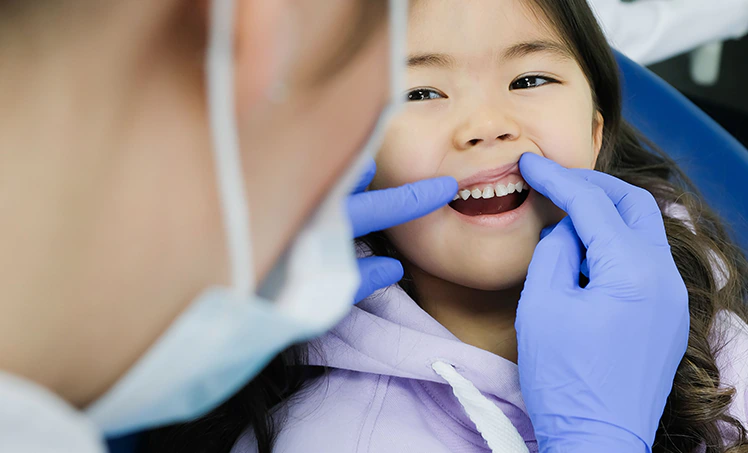
When a 6-year-old opens wide for me and those first adult molars are pushing through, I’m checking more than the teeth. I look at how wide the palate is, whether the lips rest together, how big the tonsils are and whether the tongue sits up on the roof of the mouth. A narrow palate and a mouth hanging open tell me the new teeth may not have room, and that this child may be breathing through their mouth at night.
And a wide range is normal, but the range has edges. No loose teeth by age 8, or teeth falling out before 4, deserves an exam and probably an x-ray to see what is going on underneath.
The tooth fairy keeps the schedule. Your job is the stuff she can’t see.
Children lose their first tooth around age 6, lower front first, and the last baby molars go somewhere around 12 or 13. Let loose teeth fall out on their own and keep brushing around them while you wait. Shark teeth, that second row behind the baby teeth, usually sort themselves out within weeks. Early loss from decay, and no loose teeth by 8, are the two things worth a call to your dentist.
My 7 year old hasn’t lost any teeth. Is that normal? Yes, 7 sits comfortably inside the normal range of 4 to 8. Children who got their baby teeth late tend to lose them late, and boys often run behind girls. If you reach age 8 with nothing wiggling, book an exam and an x-ray so your dentist can see whether the adult teeth are developing underneath.
How many baby teeth do children lose in total? All 20 of them, over roughly six years. The front teeth go first, between about 6 and 8, then there is a lull before the canines and baby molars leave between about 9 and 12. By 12 or 13, most children have 28 adult teeth in place, with wisdom teeth arriving later, if at all.
Is it bad if my child swallowed their baby tooth? Almost never. A baby tooth is small and smooth by the time it falls out, since most of the root has already dissolved, and it passes through the gut on its own. If your child is coughing, wheezing or having trouble breathing afterward, call your pediatrician, since that suggests it went down the wrong pipe.
Why is my child’s new adult tooth so yellow and jagged? Adult teeth are naturally a shade darker than baby teeth, so next to the bright little baby teeth they look yellow by contrast. The bumpy edges on new front teeth are called mamelons, and they usually wear down with chewing over the next few years. Neither one is a sign of a problem.
Dr. Staci Whitman, DMD, FMCP, is a board-certified dentist and is certified in functional medicine. She is based in Portland, Oregon and is the author of SPIT (Crown, 2027).