Discover more from Dr. Staci on Substack.
Fix cavities, bad breath, receding gums, snoring, and hormones at the root. Weekly at-home tips from a board-certified dentist, because “brush, floss, and avoid sugar” were never the only answers. 🦷


I think about it differently. The roof of the mouth is also the floor of the nose, and a child with a narrow palate is breathing through a narrow nose.
When I recommend an expander at seven, I’m mostly thinking about airway and a jaw with room for the tongue. Straighter teeth are the bonus.
It widens the upper jaw, and because the nasal floor moves with it, it widens the nose too. That’s why it can make breathing easier, along with making room for teeth.
Some anatomy, because it’s genuinely cool. The upper jaw is two halves joined down the middle by the midpalatal suture, and in a child that seam is still open and flexible.
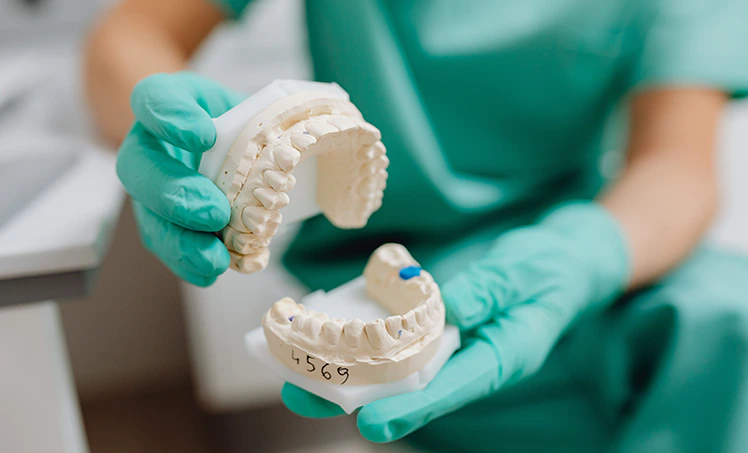
A rapid palatal expander is a small appliance cemented to the upper molars with a screw in the middle. A parent turns the screw a quarter turn or so each day, the two halves ease apart, and new bone fills the gap over a few months.
Yes, a gap opens up between the front teeth during expansion. Parents panic. It closes on its own, and honestly it’s proof the thing is working.
Studies measuring airflow after expansion show lower nasal resistance. And a 2004 Italian study of children with sleep apnea found that rapid maxillary expansion resolved the apnea in the children treated.
Widen the palate and you’ve widened the floor of the nose. That’s orthodontics doing airway work.
Crowding is almost always a small-jaw problem. Teeth come in a genetically set size, and a jaw that didn’t grow wide enough for them stacks them like commuters on a full train.
What decides jaw width is largely function. A tongue resting up on the palate pushes outward on the upper arch and acts as a slow, gentle expander. Nasal breathing keeps the lips sealed, so the cheeks and the tongue balance each other.
A child who mouth-breathes, or whose tongue sits low from a tie or a habit, loses that outward pressure, and the palate grows narrow and high.
Weston Price documented this a century ago in populations that shifted from traditional diets to processed ones: soft food, less chewing, and within a generation, narrower faces and crowded teeth.
Crowded teeth in a child are, first and foremost, a growth signal. The cosmetic part comes way later in the conversation.
Roughly seven to eleven, while the suture is still open. That window is the whole reason expansion belongs in early orthodontic treatment instead of the teen years.
The suture starts to knit and interlock through the tween years and fuses in the mid-teens. Expansion between about seven and eleven is easy and skeletal, meaning the bone itself widens.
After fusion, the same appliance mostly tips teeth outward, and a true widening needs surgery.
The American Association of Orthodontists asks for a first orthodontic look by age seven for exactly this reason. A first look is just a conversation; you can walk out without any hardware.
No, and be wary of anyone who says otherwise.
The Cochrane reviews on two-phase treatment for children with a big overjet (front teeth sitting well ahead of the lowers) found that starting at seven and finishing at thirteen produced about the same final result as one round of braces in the teens, with more total time in appliances.
The picture changes when the problem is width or breathing. These are the signs I want to see at six or seven:
Those are the cases where early expansion changes how the face and airway grow.
I once saw two siblings on the same afternoon. The nine-year-old had front teeth well ahead of her lowers and breathed through her nose all day and night, and I told her parents she could wait and do braces with her friends. Her seven-year-old brother had a crossbite, a palate shaped like a cathedral ceiling and a snore loud enough to clear the family dog out of the room. He got the expander, and by the end of the year his mom said he was sleeping with his lips closed for the first time she could remember.
An expander widens bone. Teaching the tongue to live on the palate and the nose to do the breathing is a separate job, and the appliance can’t do it.
A child who finishes expansion and goes back to an open mouth and a low tongue can lose a good portion of the width, because the forces that narrowed the palate in the first place are still there. Gravity and habit are patient.
That’s why I pair expansion with an allergy and airway workup and with myofunctional therapy (tongue and lip posture exercises). And it’s why I want to know the nose is open before we start turning the key.
A palate expander is an airway tool as much as an orthodontic one, and it works best between about seven and eleven while the suture is still open. Crowded teeth, a crossbite, mouth breathing or snoring at six or seven are reasons to get an airway-aware orthodontic opinion; a big overjet on a nose-breathing child can usually wait. Fix the breathing and the tongue posture too, or the palate will drift back toward where it started.
Does a palate expander hurt? Most children describe pressure more than pain, often felt across the nose, cheeks or front teeth for a little while after each turn. It usually settles within the first few days as they get used to it. Soft foods early on help, and talking and eating feel normal again quickly.
Can a palate expander help my child’s sleep apnea? For children with a narrow palate, it can. A 2004 Italian study found rapid maxillary expansion resolved apnea in the children treated, and other studies show lower nasal resistance after expansion. If enlarged tonsils and adenoids are the main blockage, an ENT needs to be part of the plan as well.
Is phase 1 orthodontics a waste of money? For some problems, yes. Cochrane reviews found early two-phase treatment for a big overjet ended up about the same as braces in the teens. For width problems, crossbites and breathing issues, early expansion uses a growth window that closes in the teen years, so timing matters a lot more.
Can my child keep a palate expander from relapsing? Change the forces that narrowed the palate in the first place. That means an open nose, lips sealed at rest, and a tongue that lives on the roof of the mouth. Myofunctional therapy teaches that posture, and allergy care keeps the nose clear. The appliance makes the room; the habits keep it.
Dr. Staci Whitman, DMD, FMCP, is a board-certified dentist and is certified in functional medicine. She is based in Portland, Oregon and is the author of SPIT (Crown, 2027).